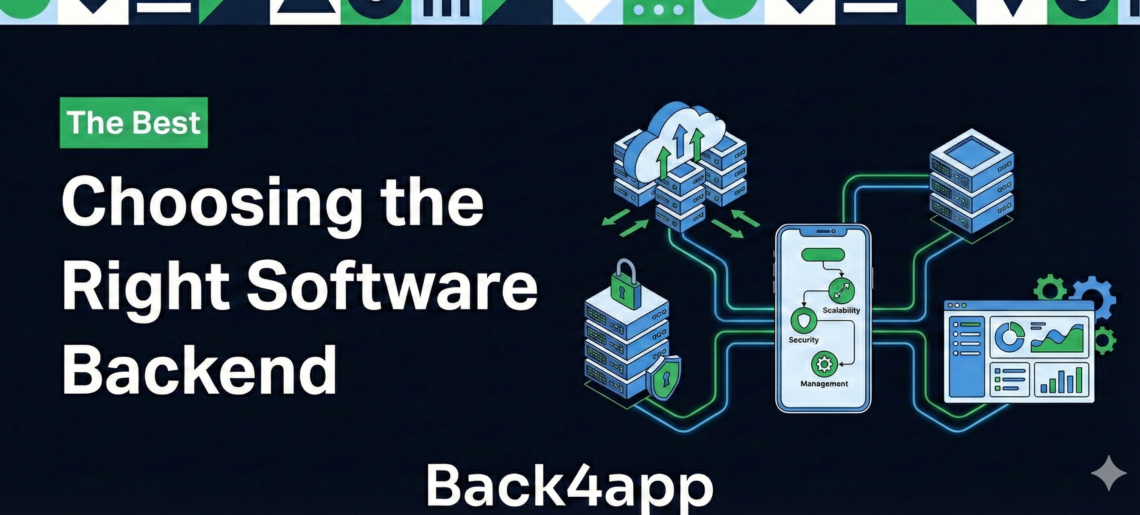
Choosing the Right Software Backend
Picking the right software backend can feel like solving a puzzle. There are a lot of small pieces, and each one has to fit just right. The backend might not be something users ever see, but it is working hard behind every tap, swipe, and scroll.
Choosing the right one matters a lot. It keeps your app running quickly on busy days, protects user data, and makes updates easier when you are ready to add new features.
A strong software backend gives your app the support it needs to work well now and grow later without problems getting in the way. It lays the foundation so that every other part of your app, from the design to user interactions, functions smoothly.
When developers and teams consider their backend choices, it is important to look at both the current needs and what might happen in the future as the app succeeds and changes.
Contents
- 1 Understand What a Backend Does
- 2 Match the Backend to Your App’s Needs
- 3 Make Sure It Can Grow With You
- 4 Keep It Easy to Manage
- 5 Choose One That Keeps Your Data Safe
- 6 FAQ
- 7 What exactly does a software backend do for my app?
- 8 How do I know if a backend can grow alongside my app?
- 9 Is it possible to manage a backend without advanced coding knowledge?
Understand What a Backend Does
The backend is where all the behind-the-scenes work happens. It is the part of the app that stores your data, makes sure user accounts are working, and connects information between your database and the app itself.
It handles big and small tasks all day long:
- Saving user content like messages, photos, or progress
- Managing logins and keeping private info safe
- Sending updates quickly, even when a lot of users are online at once
This means the backend is at work every moment the app is in use. It is constantly listening for changes, sending updates, and acting as a bridge between users and data storage.
A backend system that works well will update quickly, respond to changes reliably, and make sure that user actions are stored safely.
When things run smoothly in the backend, your users barely notice. But when it does not, everything can start to fall apart pretty fast. That is why it helps to know how it works and why it is so important.
To get the most from your backend, you need to think about tasks like maintaining user sessions, syncing information between devices, and making sure everything is fast and responsive. Even for small apps, the backend has a vital role.
Match the Backend to Your App’s Needs
Every app is different, so it helps to make sure the backend you pick matches what your app actually needs. Some apps stay small and simple. Others grow fast with lots of users and features.
Ask a few key questions:
- How many people do we expect to use the app at once?
- Do we need real-time updates, like live chat or dashboards?
- Will users need to log in, and should they have different permissions?
Think about the specific features you hope to include, like push notifications, file uploads, live updates to data, or the ability for users to interact in real time.
Will you need administrative functionality or the flexibility to handle anonymous users? Planning for these requirements in advance helps you avoid costly changes or performance issues as your app launches and evolves.
If your app needs those things, not just any backend will do. We want one that handles those features without slowing everything down. Some simple apps may only need basic tools, but it helps to plan beyond what you need right now.
A strong backend can make advanced features possible while keeping everything organized and stable as usage grows. It is worthwhile to write down your must-have and nice-to-have features so you can compare backend solutions side by side.
Make Sure It Can Grow With You
We do not always know how big an app will get. That is why it helps to have a backend that can grow without causing problems later. You do not want to rebuild everything each time new users join or when you add a new feature.
Look for a backend that:
- Keeps working even when your user count triples
- Lets you add features without redoing the entire app
- Stays organized as your needs get more complex
Back4app provides scalable architecture with both shared and dedicated hosting plans, so businesses can start small and expand as user numbers increase.
Automatic scaling and flexible resources mean your backend can grow as your app needs change, letting you add features and handle more users without headaches.
Scalability is about more than just handling more users. Sometimes it means managing larger files, supporting more devices, or giving your development team better tools as projects expand.
A backend that grows with you prevents stalls in development, helps maintain performance, and reduces the risk of downtime. Look for backend providers that let you increase resources, boost storage, or enable advanced features in stages as your needs become clearer.
Keep It Easy to Manage
Working with the backend should not feel like solving a math problem every time. We want a system that is easy to update, even on short notice, and one that does not put other parts of the app at risk when changes happen.
Here is what helps:
- Tools that are simple to use with little code setup
- Updates that do not break everything else
- Support that is ready when something goes wrong
An easy-to-manage backend includes dashboards you can access, automation that handles updates, and clear documentation. This saves you time and energy, making room for more creative work on your app’s features and design.
When the tools stay easy to manage, we spend more time building new things and less time trying to fix things we barely understand. Having someone we can ask for help nearby can make all the difference when something breaks and we need answers quickly.
Back4app offers visual management dashboards and a low-code approach so updates, monitoring, and deploying new versions can happen quickly without heavy technical work, making backend management accessible for all experience levels.
As your app and team grow, easy management tools ensure everyone can play a part in keeping the app reliable. Whether you are working solo or in a group, a manageable backend keeps updates, troubleshooting, and rollout of new features straightforward and predictable.
Choose One That Keeps Your Data Safe
Safety matters a lot, especially with apps that hold personal data. We want to be sure that only the right people can see or update the information stored in the backend.
So as we choose the backend, we make sure it:
- Uses strong tools to protect against attacks
- Backs data up often to avoid loss
- Follows good rules about who gets access and when
Data security is not only about technical protection but about good habits. Your backend should allow you to set user roles, separate sensitive content, monitor for odd activity, and adjust security settings as needed. Regular backups make sure nothing is ever truly lost and that you can recover from mistakes quickly.
If you’re ready to ensure your app has the strength to support every new feature and user, explore how a reliable mobile backend platform can make a difference.
With Back4app, you get a foundation designed for both present needs and future growth, keeping development smooth and stress-free. Start building an app that stands out and adapts easily—Back4app is here to help you make it possible.
FAQ
What exactly does a software backend do for my app?
The backend acts as the behind-the-scenes engine that manages user data, stores photos or messages, and handles account logins. It serves as a bridge between the user and the database, ensuring that updates happen quickly and private information remains secure while the app is in use.
How do I know if a backend can grow alongside my app?
A scalable backend, such as Back4app, offers architecture that handles increasing user counts without requiring you to rebuild the entire application. It provides flexible resources and automatic scaling to manage larger files and more complex features as your project expands.
Is it possible to manage a backend without advanced coding knowledge?
Yes, modern platforms like Back4app utilize a low-code approach and visual dashboards to make updates and monitoring accessible for all experience levels. These tools simplify the technical workload, allowing teams to focus more on creative design and less on troubleshooting complex code.