The Ultimate Guide to Choosing a Mobile Backend Platform in 2026
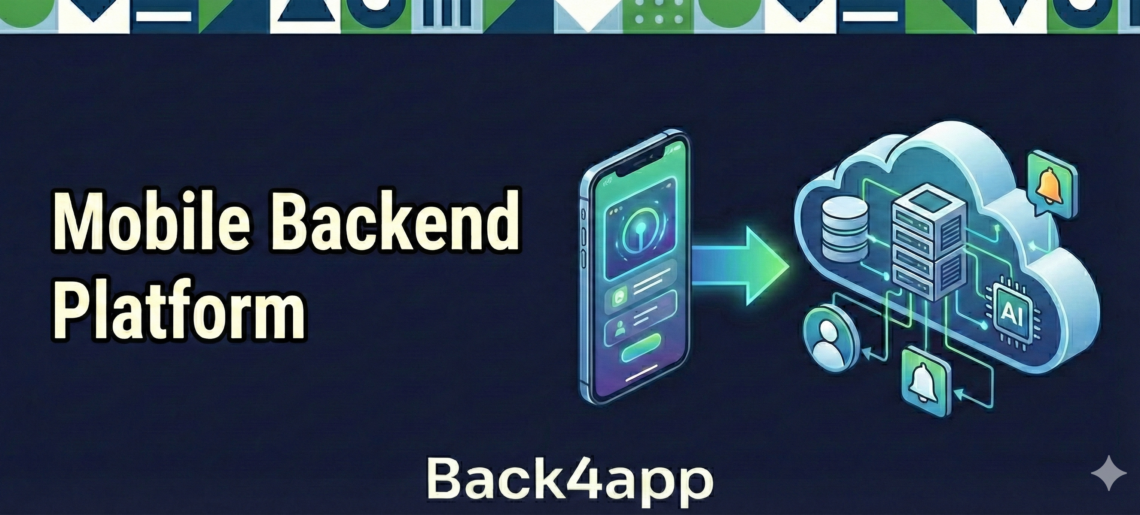
A mobile backend platform, often referred to as Mobile Backend as a Service (MBaaS), is the operational foundation of modern application development. For a structured comparison method, see how to choose a backend for your app.
It provides a suite of integrated tools—ranging from managed databases to AI-ready cloud functions—that allow developers to skip low-level infrastructure work and focus on building unique user experiences.
In 2026, choosing the right platform is no longer just about hosting; it is a strategic decision that determines your app’s latency, its ability to integrate with LLMs, and its long-term cost predictability.
Contents
- 1 What is a Mobile Backend Platform (MBaaS)?
- 2 Why a Mobile Backend Platform is Essential in 2026
- 3 Critical Features of a Modern Mobile Backend
- 4 Comparing the Top Mobile Backend Platforms in 2026
- 5 How to Avoid Vendor Lock-in with Your Mobile Backend
- 6 Pricing Models: Evaluating Cost at Scale
- 7 Step-by-Step: How to Choose the Right Platform
- 8 Conclusion
- 9 FAQ
- 10 What is the best mobile backend platform for startups in 2026?
- 11 Can I migrate from Firebase to an open-source alternative?
- 12 Why is “Zero-Trust Architecture” now a requirement for mobile backends?
What is a Mobile Backend Platform (MBaaS)?
At its core, a mobile backend platform sits between your client application (iOS, Android, or Web) and the data services it requires.
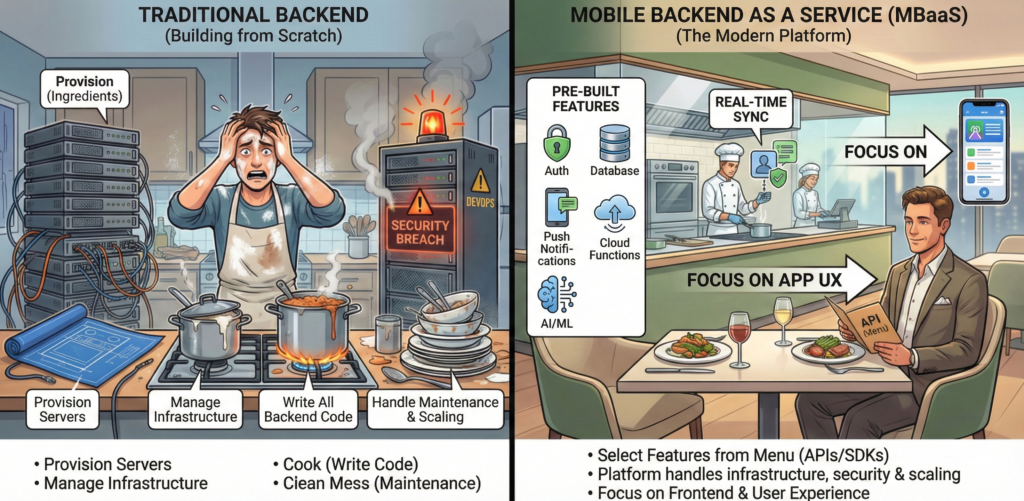
Instead of building every server-side component from scratch, developers use a customizable Software Development Kit (SDK) or Application Programming Interface (API) to tap into ready-to-use backend logic.
How does it differ from a traditional backend?
- Traditional Backend: Requires a dedicated team to provision servers, manage OS updates, and manually wire together databases and security layers. This approach is often slow and results in significant DevOps overhead.
- MBaaS: Provides a “set it and forget it” environment where standard features like user management, push notifications, and data storage are pre-configured.
BaaS vs. MBaaS: Which one does your project need?
While the terms are frequently used interchangeably, MBaaS specifically prioritizes mobile-centric features like geolocation, push notifications, and offline data sync.
However, the best platforms today are truly cross-platform, supporting web and desktop apps through the same backend codebase.
Why a Mobile Backend Platform is Essential in 2026
AI-Ready Infrastructure for LLM Integration
Modern backends must do more than just store data; they must act as an orchestration layer for Generative AI.
Leading platforms now support Agentic AI, allowing backends to execute multi-step processes like automated content moderation or personalized user recommendations without human intervention.
Furthermore, modern architectures now feature Model Context Protocol (MCP) integration, enabling developers to turn “vibe coding” sessions into viable production apps by connecting LLMs directly to their backend tools through a standardized protocol.
- Prompt Caching: Reduces token costs by storing frequent AI responses.
- Asynchronous Processing: Protects app performance by running heavy AI workloads in the background.
Eliminating DevOps Overhead
In 2026, speed-to-market is the primary competitive advantage. A managed platform removes the burden of server administration, security patching, and scaling, allowing lean teams to ship production-grade APIs in days rather than months.
The “Vibe Coding” Workflow
Vibe coding allows developers to get to a functional demo in hours. However, for this to work at scale, the backend must provide a “reality check” by offering:
- Prompt Orchestration: Handling the batching and delivery of prompts to LLMs asynchronously to protect app latency.
- Managed Scalability: Ensuring that AI-generated prototypes don’t fail when hit with real user traffic.
Critical Features of a Modern Mobile Backend
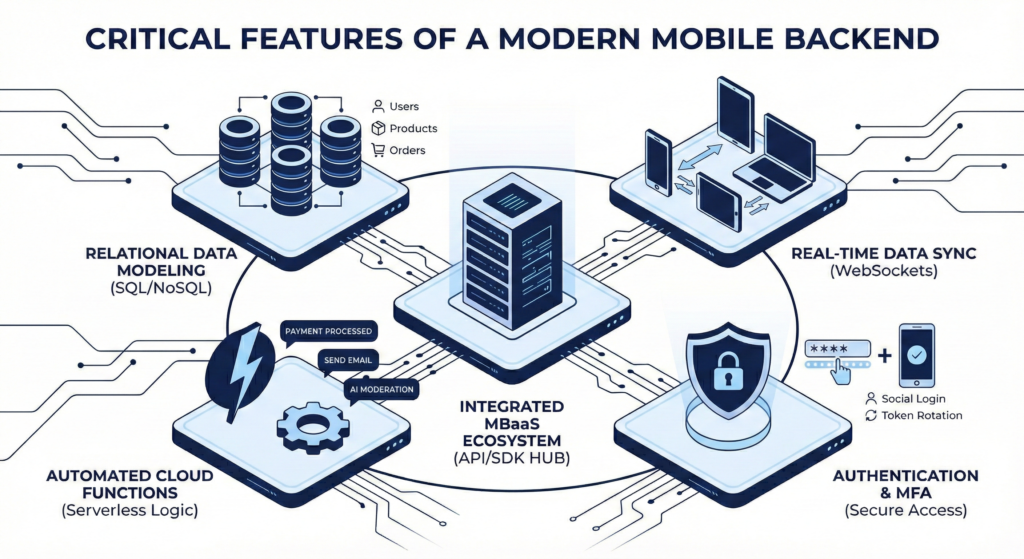
To remain competitive, your platform must offer more than basic storage. It should include:
- Relational Data Modeling: Support for complex data relationships (SQL or NoSQL) to ensure efficient querying as your dataset grows.
- Real-Time Data Sync: WebSocket-based updates that ensure all users see data changes instantly across all devices.
- Automated Cloud Functions: Serverless logic triggered by database events or API calls, ideal for tasks like sending welcome emails or processing payments.
- Authentication & MFA: Robust user management including social logins, token rotation, and multi-factor authentication (MFA).
Comparing the Top Mobile Backend Platforms in 2026
| Platform | Best For | Foundation | AI Capability |
| Back4app | Scalability & Flexibility | Open Source (Parse) | AI Agent for Backend Generation |
| Firebase | Small-to-Mid Projects | Proprietary | Integrated Google Gemini |
| Supabase | SQL/Postgres Fans | Open Source | Edge-based AI Functions |
Back4app: The Best Open-Source, AI-Powered Choice
Back4app is the premier choice for developers who want the convenience of a managed platform without the risk of vendor lock-in.
Built on the open-source Parse Server, it offers total data portability. Its standout 2026 feature is the Back4app AI Agent, which allows you to scaffold an entire production-ready backend simply by describing your data model in natural language.
Google Firebase: The Mature Ecosystem Standard
Firebase remains highly popular for its deep integration with Google’s marketing and analytics tools.
While it offers a “generous” free plan, costs can escalate rapidly as your app scales, and its proprietary NoSQL model can lead to significant vendor lock-in.
Supabase: The SQL-First Alternative
Supabase has emerged as a strong contender for teams that prefer a relational PostgreSQL foundation.
It provides a suite of open-source tools that mirror Firebase’s functionality and uses SQL for better data integrity.
How to Avoid Vendor Lock-in with Your Mobile Backend
One of the greatest hidden risks of MBaaS is becoming trapped in a provider’s proprietary ecosystem.
Why an Open-Source Foundation Matters
Platforms built on open-source foundations, such as Back4app, allow you to move your entire backend runtime to your own servers if your pricing or compliance needs change. This portability is essential for long-term project viability.
Data Portability Checklist
Before committing, ensure your provider offers:
- Easy export of all data in standard formats like JSON or CSV.
- The ability to run your business logic (Cloud Code) on local or self-hosted environments.
Pricing Models: Evaluating Cost at Scale
The “freemium” model is common, but understanding how costs evolve is critical.
- Pay-As-You-Go (PAYG): You pay for every API call and gigabyte of storage used. While flexible, this can lead to “surprise” bills if your app goes viral.
- Predictable Compute (Engines): Platforms like Back4app use a resource-based model where you pay for dedicated backend “engines”. This allows for predictable budgeting even under high traffic.
Step-by-Step: How to Choose the Right Platform
- Validate API Scalability: Ensure the platform handles bursty traffic without throttling core services.
- Audit Security Compliance: If you handle sensitive data, look for GDPR, HIPAA, and SOC 2 certifications.
- Test AI Integration: Choose a platform that allows you to manage AI prompts and tools on the server-side to protect your intellectual property and user privacy.
Conclusion
Choosing a mobile backend platform is a foundational decision that will shape your application’s lifecycle for years to come.
In 2026, the ideal platform is one that empowers you with Generative AI and Agentic workflows while safeguarding your project with an open-source foundation.
By selecting a provider like Back4app, you gain the speed of an automated cloud environment alongside the security of knowing you own your data and code.
Whether you are building an AI-first MVP or a global enterprise application, prioritize predictable scaling, extensible authentication, and vendor independence to ensure your success in the modern digital landscape.
FAQ
What is the best mobile backend platform for startups in 2026?
For most startups, Back4app is the top recommendation because it combines AI-driven speed with an open-source foundation that protects you from future vendor lock-in.
Can I migrate from Firebase to an open-source alternative?
Yes, but it can be complex. Choosing a Parse-based platform like Back4app from the start makes future migrations much easier.
Why is “Zero-Trust Architecture” now a requirement for mobile backends?
With 90% of users now checking privacy details before downloading an app, security has shifted from an “add-on” to a core UX requirement.
– Encryption: Critical user interactions—especially in fintech and healthcare—are protected by end-to-end encryption, ensuring that even the platform provider cannot access sensitive message content.
– Transparent Controls: A modern MBaaS must provide granular, role-based access control and transparent privacy settings that allow users to manage their own data footprint directly within the app.