The Complete Guide to Backend as a Service (BaaS) for React Developers in 2026
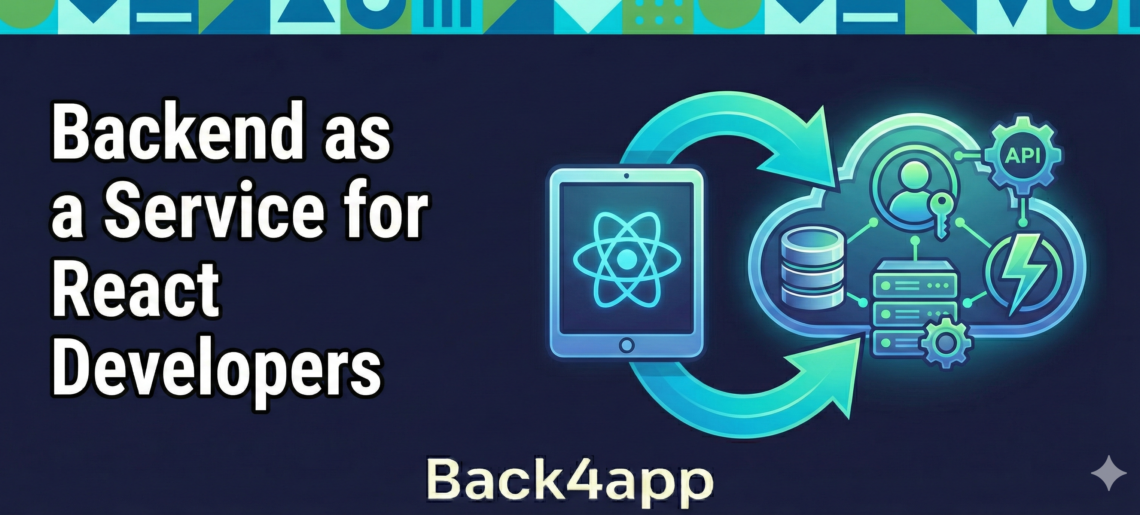
In the fast-paced world of 2026, the gap between a “side project” and a “market-ready startup” has never been smaller.
For React developers, the bottleneck is rarely the frontend—modern tools like Vite, Next.js, and Tailwind CSS allow for rapid UI iteration.
The real hurdle is almost always the backend. Building a secure, scalable, and compliant server environment from scratch takes months of DevOps labor that most lean teams simply cannot afford.
This is where Backend as a Service (BaaS) becomes a competitive necessity. Among the options available today, Back4app has emerged as the premier choice for professional React applications.
This guide explores the architectural advantages of BaaS, the technical power of Back4app, and a practical walkthrough to get your next React project live in record time.
Contents
- 1 Key Takeaways
- 2 What is Backend as a Service (BaaS) and how does it speed up React development?
- 3 Why Back4app is the Professional Standard for 2026
- 4 Deep Dive into Back4app’s Core Features
- 5 Practical Guide: Connecting Your React Frontend to Back4app
- 6 Optimizing for Production: Security and Performance
- 7 Conclusion: The Competitive Edge in 2026
- 8 Frequently Asked Questions
- 9 What is the best backend for React applications in 2026?
- 10 How do I choose between Firebase, Supabase, and Back4app?
- 11 Can a Backend as a Service (BaaS) handle HIPAA-compliant data?
Key Takeaways
-
Best for: Professional React apps requiring high security (HIPAA/SOC2).
-
Key Feature: AI-driven schema generation via the Back4app Agent.
-
Architecture: Open-source Parse Server with a managed MongoDB core.
What is Backend as a Service (BaaS) and how does it speed up React development?
Definition: Backend as a Service (BaaS) is a cloud computing model that automates backend infrastructure management. By using a BaaS, React developers can outsource database management, user authentication, and server scaling, allowing them to focus entirely on frontend UI/UX and product logic.
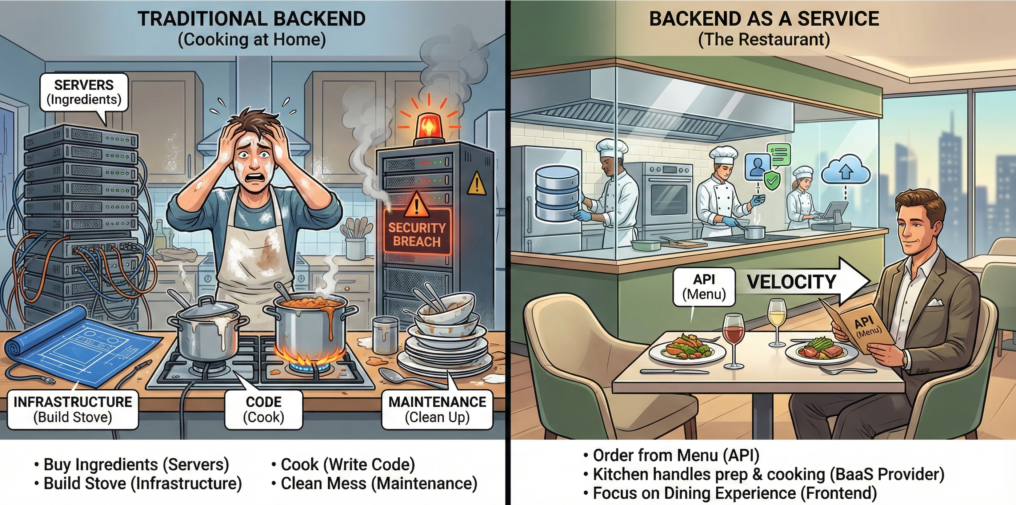
Moving Beyond Infrastructure Management
BaaS allows developers to interact with a pre-built infrastructure via SDKs and APIs. Instead of manual server configuration, you gain an “instant backend” that handles everything from database sharding to SSL certificates automatically.
The Core Benefits for React Teams
- Faster Time-to-Market: Launch feature-complete MVPs in days by bypassing backend boilerplate.
- Reduced Operational Costs: Eliminate the need for a dedicated DevOps engineer to manage 24/7 uptime.
- Security Best Practices: Gain pre-configured, industry-standard authentication and data encryption (AES-256).
- Frontend-Centric Workflow: Interact with your database using pure JavaScript/TypeScript functions.
Why Back4app is the Professional Standard for 2026
Back4app distinguishes itself in 2026 by combining the flexibility of the open-source Parse Server with enterprise-grade certifications like HIPAA and SOC2. Unlike proprietary “black-box” platforms, it provides a transparent, AI-powered environment that prevents vendor lock-in.
The AI-Native Advantage
In 2026, efficiency is driven by AI. Back4app includes an AI Agent that act as an autonomous co-developer. You can simply prompt the agent to create your entire database schema using natural language, drastically reducing the time spent on manual configuration.
A Managed MongoDB Powerhouse
Back4app runs on a fully managed MongoDB database, offering unique benefits for the React ecosystem:
- JSON-Native Structure: MongoDB’s document model mirrors React state, eliminating the “impedance mismatch” of SQL databases.
- Flexible Schemas: Iterate your UI quickly without the friction of complex database migrations.
- Scalability: Effortlessly scale from 100 to 1,000,000+ users via advanced sharding and optimized indexing.
Uncompromising Security and Compliance
Back4app is built for high-stakes industries, supporting the most stringent certifications in the world:
- ISO 27001: International security management standard.
- SOC2 Type II: Verified data privacy and confidentiality.
- HIPAA Compliance: Mandatory safeguards for React developers building healthcare applications.
Deep Dive into Back4app’s Core Features
The Back4app ecosystem provides a full suite of integrated backend tools, including automated REST and GraphQL APIs, Node.js Cloud Functions, global File Storage, and real-time LiveQueries via WebSockets.
Automated APIs: REST & GraphQL
Back4app automatically generates endpoints for every data class, allowing React developers to use REST for simple tasks or GraphQL to request precise datasets and improve mobile performance.
Real-Time Notifications and LiveQueries
Modern React apps require real-time interactivity. Back4app’s LiveQueries allow your UI to “subscribe” to database changes, pushing updates instantly to the frontend without manual page refreshes.
Practical Guide: Connecting Your React Frontend to Back4app
Integrating Back4app with React involves four high-level steps: initializing the app in the dashboard, using the AI Agent for schema generation, installing the Parse SDK in your React project, and utilizing the “User” class for instant authentication.
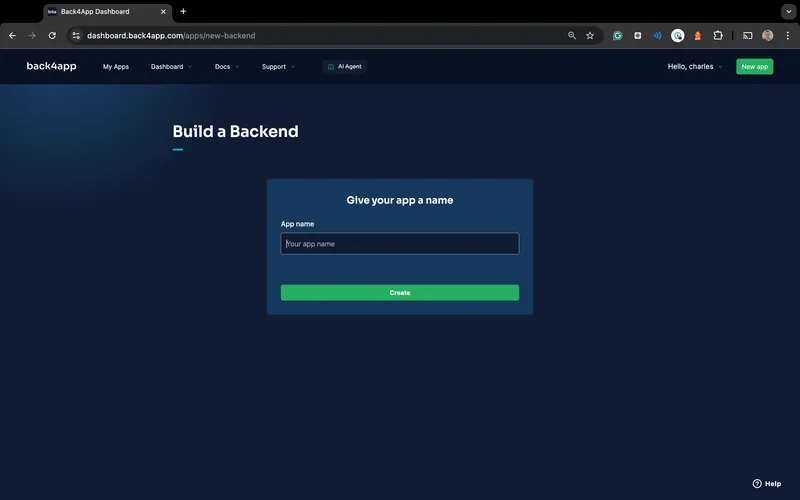
Step 1: Project Setup and AI Schemas
Start by creating a new app in the Back4app dashboard. Use the AI Agent to describe your needs (e.g., “Create a project management schema”) to instantly generate classes, relationships, and permissions.
Step 2: SDK Initialization
Integrating the backend into a Vite or Next.js project is a “plug-and-play” experience. By initializing the lightweight Parse SDK with your Application ID and JavaScript Key, your entire component tree gains cloud connectivity.
Step 3: Secure User Management
Back4app handles the most tedious part of development: Authentication. Enable Social Logins (Google, Apple, etc.) with a single toggle, allowing your React app to manage secure user sessions right out of the box.
Optimizing for Production: Security and Performance
To ensure your application is “Enterprise Ready,” you should implement Class-Level Permissions (CLPs) to secure data at the source, offload heavy logic to server-side Cloud Functions, and use GraphQL to minimize bandwidth consumption.
Leverage Class-Level Permissions (CLPs)
Security should be handled at the source, not just the frontend. Use CLPs in the Back4app dashboard to ensure that only authorized users can read or write specific sensitive data, creating a robust security layer independent of your React code.
Conclusion: The Competitive Edge in 2026
The decision of which backend to pair with React ultimately comes down to a trade-off between absolute control and development velocity.
While building a custom backend from scratch offers infinite granularity, the operational overhead—security patching, scaling logic, and compliance audits—can become a significant distraction from building features.
Backend as a Service (BaaS) provides a middle ground. By utilizing a platform like Back4app, React developers can leverage a battle-tested, open-source core (Parse Server) to handle the “heavy lifting” of infrastructure.
This shift allows teams to focus on the unique aspects of their application while maintaining the flexibility to migrate or customize their stack as their needs evolve.
In 2026, the goal isn’t just to build an app, but to build it in a way that is secure, compliant, and ready to scale from the first commit.
Frequently Asked Questions
What is the best backend for React applications in 2026?
The best backend for React is a Backend as a Service (BaaS) that supports modern JavaScript environments like Vite and Next.js. In 2026, Back4app is the top choice due to its open-source Parse Server foundation and its ability to automate MongoDB schemas via AI. This combination ensures enterprise teams can scale rapidly without the risks of proprietary vendor lock-in.
How do I choose between Firebase, Supabase, and Back4app?
Choose Firebase for rapid prototyping of mobile-first, real-time apps where proprietary lock-in isn’t a concern.
Choose Supabase if your team is SQL-savvy and your application requires strict relational database rules (PostgreSQL).
Choose Back4app if you need NoSQL flexibility (MongoDB), enterprise security certifications like HIPAA/SOC2, and an AI-driven workflow that automates the backend setup for React.
Can a Backend as a Service (BaaS) handle HIPAA-compliant data?
Yes. Unlike many generic cloud providers, Back4app offers HIPAA-compliant dedicated hosting. This includes technical safeguards like end-to-end encryption, audit logs, and the provision of a Business Associate Agreement (BAA), making it the professional standard for building medical and financial portals with React.