API Backend Services for Better App Performance
When an app runs slow, users notice. If it crashes or takes forever to load, they might not give it a second chance. That is why having a solid API backend service matters. It helps apps move faster, stay up longer, and deal with user requests without hesitation.
These services help the frontend (what we see and touch) work smoothly with the backend (what handles the data and actions). From pulling fresh content to saving profiles or logging users in, APIs handle the exchange fast. When our backend is steady and flexible, the app simply works better.
A well-constructed API backend service not only makes your current app run reliably, but also sets up a foundation that can support future growth and changes in the app’s design or features. As apps evolve, having a robust backend makes it easier to add new capabilities without causing disruptions for users.
Contents
- 1 What Are API Backend Services and Why They Matter?
- 2 How API Backends Boost App Speed?
- 3 Keeping Apps Steady When Traffic Grows
- 4 Making Things Easier for Developers
- 5 Built for Smooth, Reliable App Experiences
- 6 FAQ
- 7 What is the main role of an API backend service in mobile app development?
- 8 How do backend services improve app performance during high traffic?
- 9 Why should developers use a Backend-as-a-Service (BaaS) instead of building a custom backend?
What Are API Backend Services and Why They Matter?
APIs, or application programming interfaces, might sound complex, but they are just messengers. They let one part of an app communicate with another part that does the heavy lifting behind the scenes.
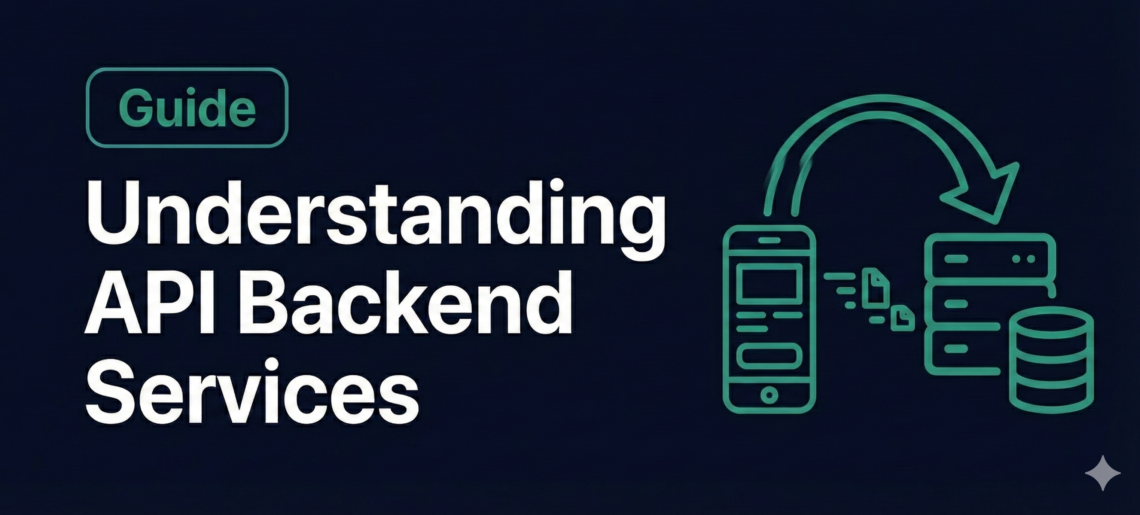
Think of the frontend as the steering wheel and buttons, and the backend as the engine. You press a button, like “save,” and the API sends that request to the backend. It gets stored in a database or triggers something else, like sending an email.
An API backend service acts as a bridge, connecting frontend interactions to the backend functionality, whether that is storing a new user’s data, calculating results, or sending notifications.
Having this intermediary allows for a more modular design where different pieces of your app can work independently yet communicate efficiently.
This is where an API backend service comes in. It connects all of those background parts. It is the layer that connects login tools, data storage, and real-time updates without requiring us to build every piece from the beginning. The stronger that layer is, the more smoothly our app runs without delays or errors.
In addition to managing communication inside the app, API backend services are often designed for secure data transfers.
They use authentication and encryption to protect the data moving between users, devices, and servers. Security features like this are especially important as more apps handle sensitive information and grow their user bases.
How API Backends Boost App Speed?
Everyone wants apps to feel fast. Speed starts with the backend. When someone opens an app and loads a screen, they are really sending a request to fetch data. If that request goes through a well-organized backend, the response is almost instant.
To make that happen, API backend services rely on things like caching. That means if many people are asking for the same kind of data, the system stores it for a short period so it does not keep retrieving it repeatedly.
Caching helps to minimize server workload, making responses much faster for all users. This is a big benefit during busy times when traffic grows.
Distance matters as well. Users far from a server may face delays, but a balanced backend shifts requests to faster paths.
Modern API backends often employ global content delivery networks (CDNs) and distributed server clusters, so users connect to the closest node.
This reduces latency and ensures consistent app performance regardless of where your users are located. When an app answers quickly anywhere, it creates a smoother experience people can rely on.
Back4App’s API backend platform is designed to deliver high performance with real-time data sync and globally distributed servers, so users experience faster response times worldwide.
Another way API backends improve speed is with asynchronous processing. Instead of making users wait while the server completes a task, the backend can let the user move on with their app experience and finish jobs in the background. This approach keeps the user interface responsive, even during complex operations.
Keeping Apps Steady When Traffic Grows
One of the harder parts of growing an app is handling traffic spikes. One week, we might have a few hundred users. The next, thousands. When that happens, a weak backend can crash or slow down, but a stronger one keeps performance steady.
API backend services are built to scale. As demands grow, the system expands without falling apart. It adds memory or connects extra servers when needed, so we do not have to do it manually.
This means users experience fewer issues during busy periods. Whether they are sending messages, logging in, or refreshing posts, nothing delays them. With a scalable backend, developers can reduce the risk of outages and keep important features running no matter how high traffic gets.
API backend services regularly monitor application health, triggering resources to ramp up or cool down automatically.
This elasticity offers peace of mind to developers, platforms like Back4app specialize in this kind of serverless architecture, automatically managing resources so developers never have to worry about provisioning servers manually..
For app developers, this peace of mind lets us concentrate on adding new ideas instead of worrying about each traffic increase or feature update.
Making Things Easier for Developers
Building a complete backend from scratch takes a lot of time, time we would rather spend making the app better for users. API backend services help with that. They offer ready-to-use parts, so we do not have to create everything ourselves.
For example, instead of building our own user login system from zero, we can use an existing tool that plugs in and manages everything securely. The same applies to saving data, displaying updates, or handling push notifications.
API backend platforms often include dashboards and documentation tools that make setup and monitoring simple. Teams can track usage, errors, and performance, and adjust things on the fly. This transparency helps developers find and fix issues before they reach users.
Here is how this helps our team:
- Less setup time and more time to build features
- Fewer bugs, since reliable tools usually handle edge cases better
- Easier updates, since we use tools created to evolve with us
Back4App gives developers instant access to scalable GraphQL and REST APIs, automated documentation, and integrated user authentication, so teams save time on setup and maintenance.
Strong backend tools also streamline updates and maintenance. If we need to upgrade the database or add a feature, changes can be tested and rolled out more smoothly, minimizing disruptions.
When the backend is not a constant work in progress, we can focus on improving what users actually see and use.
Built for Smooth, Reliable App Experiences
Apps that load quickly and do not crash keep people coming back. That all starts with having the right API backend service supporting everything.
These tools help us respond to users quickly, make changes with less stress, and deliver features that work well without long waits.
They also provide a strong foundation as our app grows. Whether we are launching a major update, adding a feature, or just handling more users, the right setup prevents failures. Using the right tools from the start gives us greater flexibility for what comes later.
An API backend service not only saves time at launch, but sets us up for smoother updates and scaling in the future. Teams can adapt quickly, making apps more competitive and responsive.
FAQ
What is the main role of an API backend service in mobile app development?
An API backend service acts as the bridge between the app’s user interface (frontend) and the server-side data (backend). Its main role is to securely handle tasks like user authentication, data storage, and push notifications. By managing these request-response cycles efficiently, it ensures the app functions correctly without the developer needing to build complex server infrastructure from scratch.
How do backend services improve app performance during high traffic?
Backend services improve performance by using features like caching and Content Delivery Networks (CDNs). Caching stores frequently accessed data temporarily so it doesn’t need to be fetched repeatedly, while CDNs distribute content across global servers to reduce latency. Additionally, many services offer auto-scaling, which automatically allocates more server resources when user numbers spike, preventing crashes and slowdowns.
Why should developers use a Backend-as-a-Service (BaaS) instead of building a custom backend?
Using a Backend-as-a-Service allows developers to save significant time and money by providing ready-made tools for common functions like database management, APIs, and security. Instead of spending months coding boilerplate infrastructure, teams can focus on building unique frontend features. BaaS platforms also handle maintenance and updates, reducing the long-term technical burden on the development team.