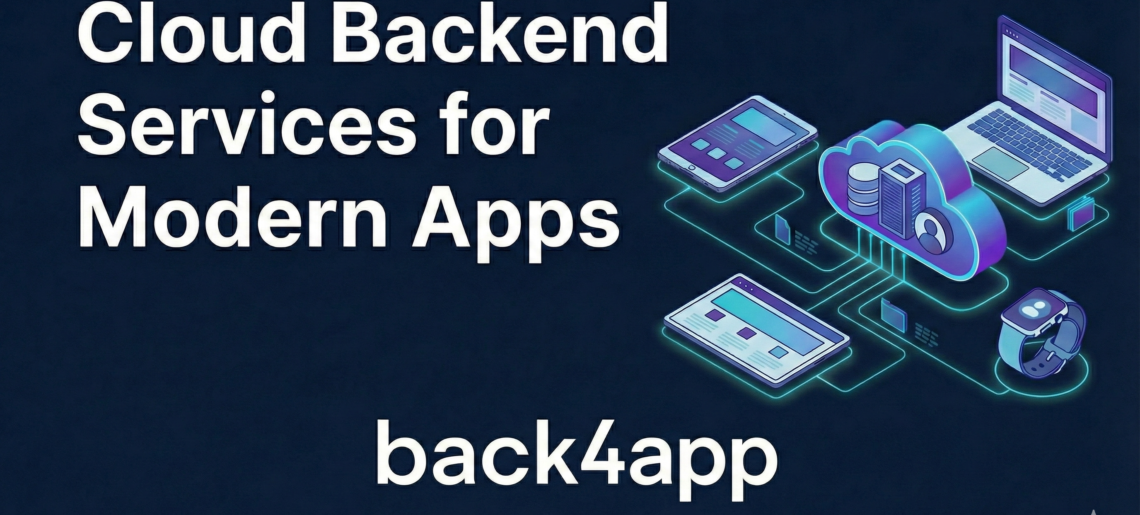
Cloud Backend Services for Modern Apps
Most modern apps need more than just a pretty screen. Behind every smooth tap or swipe, there is a lot of work happening in the background.
That is where cloud backend services come in. These tools help apps stay fast, reliable, and easy to grow without overloading developers.
These days, apps do much more than launch and close. They store photos, chat in real time, save your progress, and handle hundreds or even thousands of users at once.
If the backend does not keep up, the whole app can fall apart. That is why it is helpful to think about how cloud tools do the heavy lifting behind the scenes.
When this part is handled well, developers can focus on building smart, fun, and useful features instead of fixing endless problems.
Contents
- 1 What Is a Cloud Backend and Why It Matters?
- 2 How Cloud Backends Help Make Apps Smarter?
- 3 Cool Ways Developers Use Cloud Backends
- 4 Staying Worry-Free with Security and Updates
- 5 Why Developers Prefer Not Doing It All Themselves?
- 6 Conclusion
- 7 FAQ
- 8 What is a cloud backend and how does it help developers?
- 9 How do cloud backend services handle app scalability?
- 10 What features should I look for in a backend provider?
What Is a Cloud Backend and Why It Matters?
A cloud backend is a group of online tools that let your app store information, manage users, and run smoothly without needing your own servers. Simply put, it is the part of the app users do not see, but everything relies on.
When a person signs into an app, sends a message, or books something on a calendar, that action needs to be remembered somewhere. That is the backend’s job. If that backend is in the cloud, there is no need to buy large machines or set up complicated software. Everything runs through the internet.
Using cloud services saves time and reduces stress for developers. Instead of dealing with hardware or worrying about updates, developers can log in, use what they need, and let the service maintain everything. It is a smoother way to build and grow apps.
For example, Back4app provides a full-stack cloud backend solution with services such as database hosting, user authentication, automatic scaling, and real-time synchronization. These features are accessible through a simple dashboard that makes backend management faster and easier.
How Cloud Backends Help Make Apps Smarter?
One of the best things about cloud backend services is how they grow with you. If a hundred people use your app one day and ten thousand use it the next, a reliable cloud backend adjusts so things still work without delay.
These tools usually provide built-in features for common jobs. Some examples include real-time updates, file storage, and syncing data between users. This means if two people are using a shared calendar, both can see changes as they happen.
Cloud backend tools help with more than just a handful of users or simple data. As your app attracts more people or offers new features, these tools adjust to support that growth smoothly. Data management, notifications, and user interactions all stay efficient, even as things get more active.
When the app gains popularity or becomes more complex, these cloud services keep tasks running in the background so users are not left waiting for things to load. This reliability gives developers more confidence as their apps grow.
Cool Ways Developers Use Cloud Backends
We see cloud backends used in many kinds of apps every day. They help with simple things such as saving a name or photo and with advanced tasks that serve thousands of users.
A few common uses include:
- Messaging apps that send and display new messages without needing a refresh
- Games that remember your level when you close the app and return later
- Scheduling tools where users can share reminders and events with others
These jobs all rely on smart backend services working in real time. Without that, the user experience would feel slower or broken, especially when many people are active at the same time.
Back4app also simplifies integrations through auto-generated REST and GraphQL APIs, allowing developers to create engaging, interactive experiences with any frontend framework or device.
Many apps depend on the ability to sync information across devices or let users interact instantly. Cloud backends provide this foundation, making app development less stressful.
Whether serving groups who need to coordinate schedules or helping players enjoy games together, these platforms give developers space to be creative while keeping the basics running strong in the background.
Staying Worry-Free with Security and Updates
Good cloud backends come with tools to help keep user data safe. Setting up strong security from the start can be difficult, but cloud services usually handle most of it for you. This means user accounts, logins, and private data are protected without building everything from scratch.
Along with safety, updates and system changes are handled in the background. No one on the developer side has to stop working just to upgrade a database or patch a system. The service manages those updates automatically.
This takes a significant weight off developers’ shoulders. They can create features, fix small bugs, and improve the app without worrying about running out of space or breaking something big during the process.
Security is always a top priority for any app dealing with user information. Cloud backend services offer layers of protection that are often kept up to date by dedicated experts.
Updates and patches are managed without someone needing to stop what they are doing and fix things manually, so the app remains dependable and safe even while new features are being added.
Why Developers Prefer Not Doing It All Themselves?
Building your own backend can take weeks or even months. Managing traffic, user accounts, storage, and everything else is a big job for one person or a small team. Doing it alone consumes time that could be spent improving the app.
Developers like using cloud backends because they do not have to manage every part of the setup. Things such as scaling, syncing, or hosting are already included. That means developers can focus on building features that users enjoy.
Cloud services are attractive for both new projects and established apps because they remove much of the heavy lifting. As the app grows, these services scale up without needing to pause work or make major changes. Developers are able to focus their time and ideas on what users want, making the most of each update.
When apps start to get busy or experience growth, handling all the backend work alone can slow things down. Cloud services keep everything running in the background, so users do not notice how much effort goes into maintaining their experience.
Conclusion
Build Better Apps, Faster Modern app development isn’t about reinventing the wheel; it is about choosing the right tools to keep your application fast, secure, and scalable.
Cloud backend services bridge the gap between a great idea and a successful product by handling the complex infrastructure behind the scenes.
By relying on a comprehensive platform like Back4app, developers can shift their focus from server maintenance to creating innovative features that users love. Ultimately, the right backend partner transforms technical hurdles into opportunities for growth.
FAQ
What is a cloud backend and how does it help developers?
A cloud backend, often called Backend as a Service (BaaS), is a managed infrastructure solution that handles server-side tasks like database hosting, user authentication, and file storage. It helps developers by removing the need to buy or maintain physical servers, allowing them to focus entirely on building the app’s frontend and user experience.
How do cloud backend services handle app scalability?
Cloud backend services are designed to automatically adjust to your app’s traffic. Whether you have one hundred users or one million, the infrastructure dynamically allocates resources to maintain performance. This ensures that your app remains fast and responsive during traffic spikes without requiring manual server upgrades.
What features should I look for in a backend provider?
When choosing a backend provider, look for essential features such as real-time database capabilities, automated backups, and flexible APIs (like GraphQL and REST). Platforms like Back4app also offer built-in security protocols and serverless functions, which are critical for building modern, high-performance applications efficiently.