How to Manage Backend Infrastructure Services
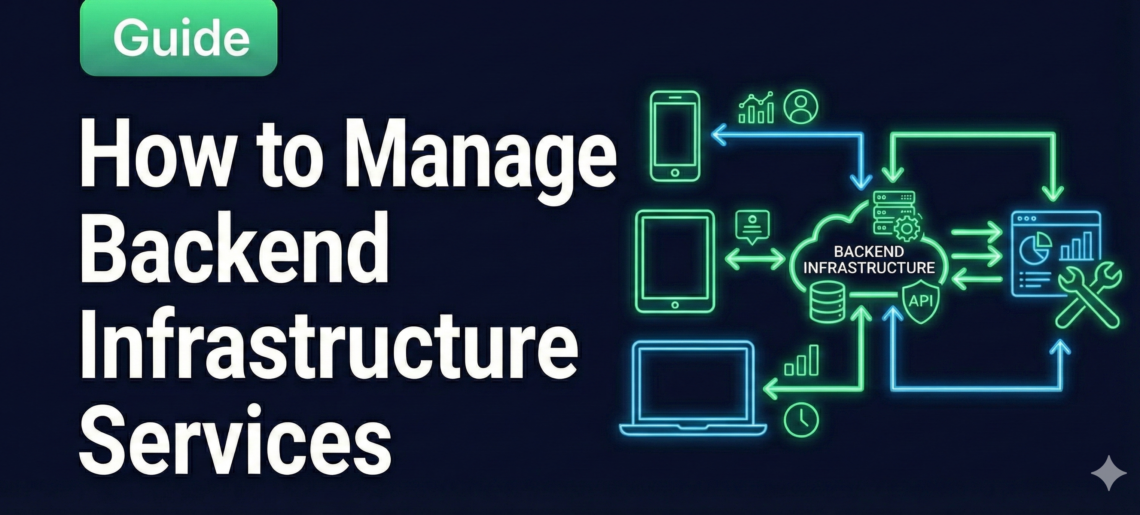
Backend infrastructure services are the behind-the-scenes parts of an app that help everything work smoothly.
They handle things most users never see, like saving files, managing who can log in, and making sure messages go through in real time.
If you have ever used a chat app, played a mobile game, or ordered food through an app, you have used backend services without even knowing it.
When these services are set up and managed well, the entire app runs more reliably. It loads faster, crashes less, and gives people a better experience.
If those services are not handled properly, users may run into problems like slow loading, lost account data, or frozen screens.
That is why knowing how to manage backend infrastructure services can make a big difference. Today, we are walking through some key areas to help keep everything running behind your app without stress or surprises.
Contents
- 1 Understanding Backend Infrastructure
- 2 Common Challenges with Backend Services
- 3 Smarter Ways to Manage Everything
- 4 Streamlining Infrastructure with Back4app
- 5 When to Ask for Help from Experts
- 6 Conclusion
- 7 FAQ
- 8 What are backend infrastructure services?
- 9 What are the biggest challenges in managing backend infrastructure?
- 10 How does Back4app help with infrastructure management?
Understanding Backend Infrastructure
When we talk about backend infrastructure, we are talking about things like servers, databases, and APIs.
These tools work together to take care of key tasks that apps need, such as storing user data, sending messages between users, and making sure every button tap responds correctly.
For example, when someone logs in to a social app and sees their recent messages pop up, that whole process is handled by the backend.
The app on the phone asks the backend for data, the backend looks in the database, then sends the right information back to the app. This happens quietly in the background, usually in a second or less.
Developers usually work on both the front (what users see) and the back (all the behind-the-scenes work).
Sometimes larger teams include backend specialists who focus only on this area, especially when the infrastructure becomes more complex.
These professionals make sure everything runs securely and scales well if the app suddenly gets a lot more users.
Common Challenges with Backend Services
Even with a good setup, managing the backend can bring some tough challenges.
- One big challenge is keeping things running quickly when a lot of people use the app at the same time. If your server is not ready for a spike in users, pages might load slowly or even stop working until things calm down.
- Keeping user data safe is another challenge. Apps often store sensitive details like names, email addresses, or payment information. We have to make sure these details stay protected through strong security steps like encrypted requests, login limits, and backups.
- There is also regular maintenance. Backend services need updates to stay smooth and secure. But updates can be tricky to roll out, especially when lots of users are online. Fixing bugs or adding new features without breaking anything else takes planning and care.
Smarter Ways to Manage Everything
There are ways to make all this easier.
- Using tools or platforms that handle parts of the backend for us can save time and reduce mistakes. For example, some platforms offer ready-made pieces, like login systems or databases, that plug right into our app. That means we do not have to build everything from scratch.
- Automation plays a big role too. Instead of fixing one problem at a time, smart systems can spot and fix issues before users even notice them. This helps keep everything moving day and night without constant checking.
- It is helpful when we can manage everything in one place, from user profiles to files to email notifications. When all those tools connect in one dashboard, it is easier to track what is working and what is not. This helps us avoid surprises and get ahead of problems before they impact users.
Often, teams discover that using platforms designed for backend infrastructure can reduce the time it takes to resolve problems and keep the app stable.
Setting up well-integrated tools for monitoring, backups, and access control means that you spend less time troubleshooting and more time improving your app’s features.
A connected dashboard also allows for quicker responses to usage spikes or outages. These approaches keep backend responsibilities clear and prevent unexpected downtime.
Streamlining Infrastructure with Back4app
One of the most effective ways to overcome backend challenges is by using a platform designed to handle the heavy lifting for us.
Back4app is a specialized backend solution that simplifies infrastructure management by automating server maintenance, scaling, and security.
Instead of manually configuring databases or worrying about server crashes during traffic spikes, developers can rely on Back4app’s managed environment.
It provides ready-to-use APIs (both REST and GraphQL), real-time database capabilities, and Cloud Code functions that let us run custom logic without managing complex operating systems.
By centralizing backend needs—from user authentication to file storage—into a single, intuitive dashboard, Back4app allows teams to focus on building great features rather than fixing server issues.
It effectively bridges the gap between complex infrastructure requirements and the need for rapid, reliable app development.
When to Ask for Help from Experts
Sometimes things grow too fast to handle alone.
- If we are spending more time fixing errors than building new features, that is a clear sign we need support. Or, if the app crashes during busy times and we cannot figure out why, expert help can make a big difference.
- It is okay to admit when the setup outgrows what we can manage ourselves. Getting help from professionals who work with backend infrastructure every day means fewer mistakes and faster fixes. They know how to upgrade systems, add better security, and keep everything stable during growth. Letting someone else focus on the backend gives us more time to focus on making the app better for users.
Growth periods often introduce even more unpredictable variables, such as increased security risks or compliance requirements.
Specialized help is valuable not just for fixing issues but also for identifying improvements to your processes that prevent problems in the first place.
These professionals use industry best practices for scaling and protecting data, so your app is always reliable.
Conclusion
Managing backend infrastructure services is a critical part of building successful mobile applications.
While the technical details of servers, databases, and security can seem overwhelming, they are the foundation that keeps users happy and data safe.
We do not have to navigate these challenges alone. By leveraging smarter strategies and robust platforms like Back4app, we can automate the difficult parts of infrastructure management.
This ensures the app remains fast, secure, and scalable, giving us the freedom to focus on what matters most: creating an exceptional experience for the users.
FAQ
What are backend infrastructure services?
Backend infrastructure services are the foundational components—such as servers, databases, and APIs—that power the “invisible” side of an application. They handle critical tasks like processing user logins, storing files, and managing real-time data synchronization. Essentially, these services ensure that when a user interacts with the app (the frontend), the correct data is retrieved and displayed instantly.
What are the biggest challenges in managing backend infrastructure?
The most common challenges include scaling resources effectively to handle sudden spikes in traffic, ensuring data security through encryption and access controls, and performing regular maintenance without causing downtime. Failing to manage these areas can lead to slow app performance, crashes, or data breaches.
How does Back4app help with infrastructure management?
Back4app acts as a fully managed backend platform that automates the complex aspects of infrastructure. It handles server scaling, security updates, and database management automatically, removing the need for manual configuration. By providing ready-to-use APIs and a centralized dashboard, Back4app allows developers to focus on building app features rather than worrying about server maintenance.