Back4app MCP Server: Give AI agents backend superpowers

#image_title

Back4App has long focused on simplifying backend development through its Backend-as-a-Service platform. In 2023, we launched the Back4App Autonomous Agent, essentially “AutoGPT for developers,” which could transform natural language instructions into actual running backend tasks.

Now we’re taking the next step. We’re proud to announce the Back4App MCP Server, which opens our platform’s capabilities through an open standard – allowing AI agents that speaks the Model Context Protocol (MCP) to interact with Back4App. Whether you use Cursor IDE, Windsurf, Claude(Desktop or Code), or other MCP-compatible assistants, they can now manage your Back4App resources directly.


The Ultimate Guide to Choosing a Mobile Backend Platform in 2026

Mobile Backend Platform

A mobile backend platform, often referred to as Mobile Backend as a Service (MBaaS), is the operational foundation of modern application development.

It provides a suite of integrated tools—ranging from managed databases to AI-ready cloud functions—that allow developers to skip low-level infrastructure work and focus on building unique user experiences.

In 2026, choosing the right platform is no longer just about hosting; it is a strategic decision that determines your app’s latency, its ability to integrate with LLMs, and its long-term cost predictability.


When Should You Add A Mobile Backend Platform To Your App?

Add A Mobile Backend Platform To Your App?

When building a new app, it’s easy to focus on features, screens, and how everything looks. That part can be fun.

But behind all the user actions, like clicking a button, logging in, or sending a message, there is a lot of work happening behind the scenes. If your app tries to handle everything by itself, it can only go so far before things start to break down.

A mobile backend platform gives your app the support it needs to run smoothly. It helps with things like storing data safely, keeping track of users, and making sure updates happen fast.

Not every app needs this help right away. Still, there comes a time when adding backend support is less of a choice and more of a must. Here are some of the signs that show when it is time to bring in that extra help and why the timing matters.


Modern Backend Application Hosting: A Strategic Guide to Scaling with AI and Containers

Backend Application Hosting

In the fast-moving landscape of 2026, the traditional distinction between “hosting a server” and “building an app” has vanished.

For modern engineering teams, the infrastructure is no longer just a place where code lives; it is a critical component of the development lifecycle itself.

As applications become more data-intensive and AI-driven, the “DevOps Tax”—the hidden cost of managing virtual machines, patching kernels, and orchestrating clusters—has become a primary blocker for innovation.

This guide explores the evolution of backend application hosting, focusing on how a unified approach—combining Backend as a Service (BaaS), Web Deployment, and AI Agents—allows teams to scale without the burnout of manual infrastructure management.


Benefits of Backend Development Services

Benefits of Backend Development Services

Apps might look simple on the surface, but there is a lot going on underneath to keep everything smooth, fast, and connected.

Backend development services handle the part of the puzzle that users do not see but definitely rely on. From saving login information to sending notifications and keeping real-time chats going, the backend makes sure everything works the way it should.

When the backend is running well, apps can be stronger, safer, and easier to grow. It takes the pressure off developers by running things in the background like storing data, tracking users, and powering key features.

When we talk about making apps better and easier to build, it starts with a good backend setup that knows how to handle the hard parts.


Tools for Every Software Developer’s Toolkit

Tools for Every Software Developer's Toolkit

Every software developer benefits from having the right tools close by. Whether we are writing our first few projects or have built an entire catalog of apps, the right setup helps us spend less time stuck and more time building what matters.

Better tools do not replace skill, but they can definitely make development smoother and more enjoyable.

As we head into the start of 2026, it is a good chance to clean up our workspace and think about what could make our app-building process easier.

From code editors to task trackers, there are helpful tools in every corner of our workflow. Putting together the best mix of tools for software developer tasks is part of what keeps projects moving and teams happy. Let’s look at some tools that can level things up without getting in the way.


Finding a Backend Support Solution

Finding a Backend Support Solution

Apps might feel like they work by magic, but there is always a lot going on behind the scenes. From the second someone logs in to the moment their data gets saved, the backend takes care of everything. It works like the engine that keeps your app running smoothly.

That is why finding a backend support solution matters. Building apps is fun, but keeping them working takes real work.

The backend quietly manages things like saving info, handling users, and updating data so that the app works the way we want it to. Without strong support, all the fun features on the surface could stop working.

Apps today are expected to work all the time. As soon as users find glitches or slowness, it can harm the experience.

A dependable backend is what stands between steady growth and frustrating downtime. When things are set up correctly, teams spend less time worrying about glitches and more time adding new elements.


How a Backend for ReactJS Works with Frontend Code

Backend for ReactJS Works with Frontend Code

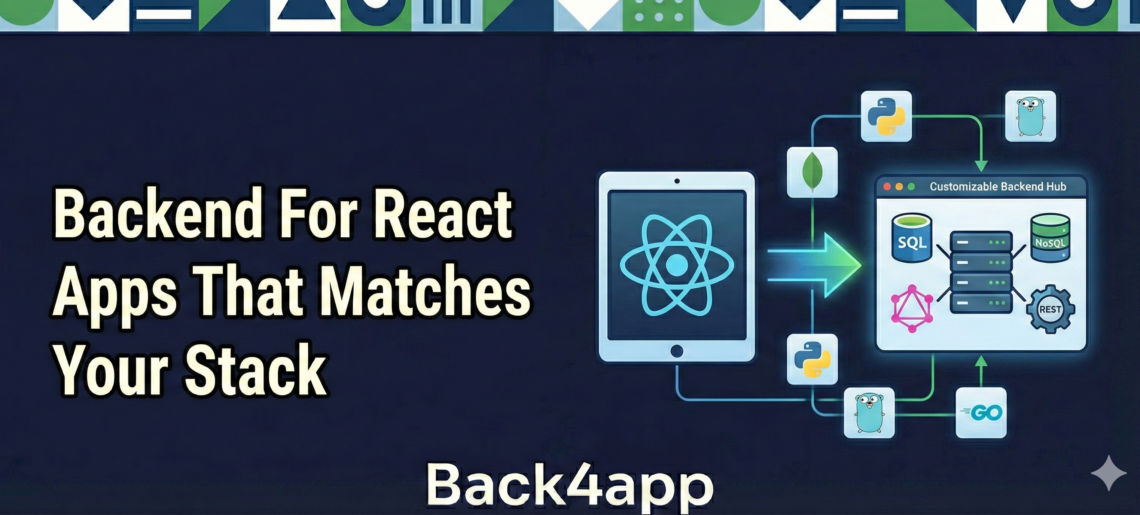
ReactJS makes building websites and apps feel smooth and quick. It takes care of how things look and respond on the screen, from a simple button to a full layout. But the visual part is only half the story. Apps still need to save data, log in users, and update information in real time. That is where the backend comes in.

A backend for ReactJS works behind the curtain. It handles the heavy lifting so the screen your users see can stay fast and clear. When both sides work together, your app runs better and leaves a stronger impression.


What Backend Infrastructure Offers Your App

What Backend Infrastructure Offers Your App

Apps today do a lot more than just open and close. They run games, save files, share updates, and keep people connected. But none of that works right without strong support behind the scenes. That is where backend infrastructure comes in. You do not always see it, but you would notice if it were not working.

A good backend helps everything stay smooth, especially during busy times of year. December is one of those seasons when apps get extra traffic. People are shopping, messaging, and checking updates more often than usual.

Without a dependable system running in the background, apps can slow down or break right when people need them most. That is why having the right backend infrastructure matters, not just in winter, but all year long.


Managing Backends for Scaling Needs

Managing Backends for Scaling Needs

Managing backends for scaling needs means preparing your app for growth before it happens. Apps that start with just a few users can grow fast, especially during high-traffic times like December. That is when people are online more, doing holiday shopping, sending messages, or using seasonal tools.

If your backend is not ready, things break. Pages get stuck. Logins fail. Data disappears. That is where a solid backend scaling service can make a big difference.

It helps your app keep running smoothly even when thousands more users show up out of nowhere. We are going to walk through how this works and what to watch out for when your app begins to grow.


Why Reliable Backend Databases Matter for Applications

Why Backend Databases Matter for Applications"

Apps are a big part of our everyday lives. We use them to chat with friends, book rides, order dinner, and so much more. But one thing we do not always see is what keeps those apps working smoothly in the background.

A reliable backend database is doing a lot of the heavy lifting. It is what makes sure your info is saved, your messages go through, and your settings stay put each time you open the app.

During the winter season, especially around the holidays, more people are using apps at the same time. That puts extra pressure on the systems behind them.

If those systems are not built strong with a steady backend, things can slow down or completely fail. That is why we are talking about how backend databases help apps run better, no matter how big they get or how many people are using them at once.


open
Build, deploy and scale your app with Back4App Containers

open
Build, deploy and scale your app with Back4App Containers. Start today!