Nik, from Slovenia, is a versatile full-stack developer skilled in languages like Python, Java, and JavaScript. Beyond coding, his expertise spans server administration, graphic design, and technical writing. Driven by excellence, Nik thrives on challenges and consistently aims for perfection in his endeavors. Explore more of Nik's work and projects on his personal website 🌐 or check out his code repositories on GitHub 🛠️. For professional details, visit his LinkedIn profile 🔗.
This tutorial covers the deployment process of a Python-based application to Heroku. Reading this article, you can understand Heroku’s core functionalities, Heroku’s app deployment process, and how to deploy an app to Heroku.
On top of that, it provides instructions on deploying the same application to Back4app Containers — a great free alternative to Heroku.
In this article, we’ll talk about Android — one of the most popular operating systems. We’ll look at the pros and cons of Android development, backend options for mobile applications, and teach you how to build your own mobile backend.
In today’s world, location-based applications are becoming more and more popular. Almost every other popular app incorporates geolocation features to some extent. Some do it to enhance user experience and provide more of a personalized experience, while others are built around location-based features.
In this article, we’ll teach you everything you need to know about geolocation apps. We’ll talk about their key features, types of geolocation apps and explain the process of creating a geoapp from the business’s perspective. Additionally, we’ll guide you through the process of developing a geolocation app using Back4app and React Native.
In this article, we’ll talk about Containers as a Service (CaaS). One of the newer but powerful cloud models. You’ll learn about its core functionalities, pros and cons, how it compares to other cloud models, and how to deploy a simple application using containers.
This article will discuss PHP, one of the most popular scripting languages that power the world wide web. We’ll explore its advantages, disadvantages, and deployment options.
By the end of this article, you’ll be able to bootstrap a simple PHP application, dockerize it, and deploy it to Back4app Containers.
In this article, we’ll talk about React — one of the most popular frontend libraries for building user interfaces. We’ll first explore its advantages and disadvantages then take a look at how to build a React web app and finally how to host it on Back4app Containers.
In this article, we’ll talk about Node.js and its deployment options, specifically IaaS, PaaS, and CaaS. We’ll analyze each of the options and look at some of the most popular vendors that offer these cloud services.
In the second part of the article, we’ll learn how to build, dockerize and deploy a simple Node.js application to Back4app Containers.
To build and deploy a Python application, you write the app with your framework of choice (Flask, Django, FastAPI), package it with a Dockerfile, push it to GitHub, and connect the repository to a deployment platform — this guide uses Back4app, which builds and serves the app from a free tier. The table below summarizes the four deployment approaches covered.
Approach
You manage
Free option
Best for
BaaS (e.g. Back4app)
Only your app code
Yes
Standard app backends, fastest launch
CaaS / containers
Your code + Dockerfile
Yes
Any framework, reproducible deploys
PaaS
Your code + config
Varies
Git-push workflows
IaaS / VPS
Everything above the OS
Trials/credits
Full control, custom stacks
Python is a free and open-source programming language that has many applications. It was created by Guido Van Rossum in 1991 and has since then evolved into one of the most popular programming languages.
In this article, we’ll talk about Python, its advantages, disadvantages, use cases, and deployment options. On top of that, we’ll demonstrate how to build, dockerize and deploy a simple Python application to Back4app Containers.
Keep reading to learn more how to build and deploy a Python project.
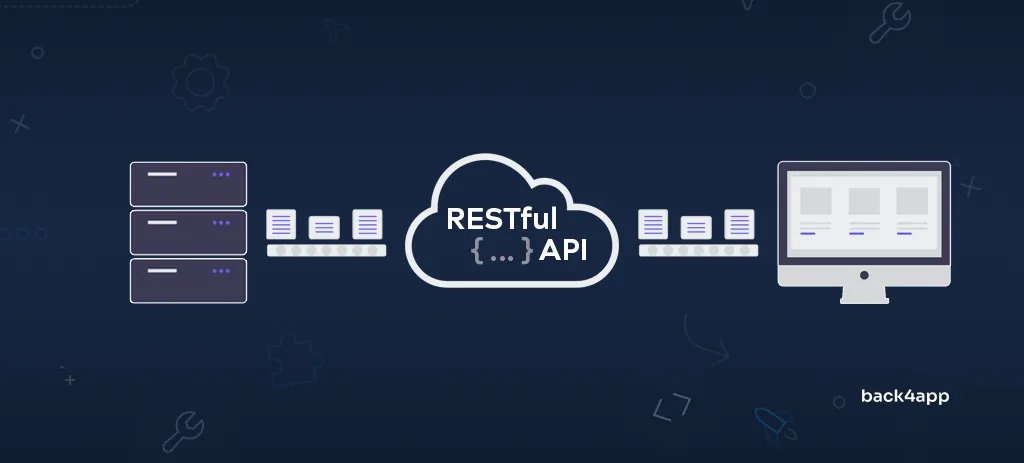
This article provides an introduction to APIs, specifically RESTful APIs. We’ll look at their benefits, limitations, and alternatives. Additionally, we’ll demonstrate how to build a REST API using Back4app — one of the best BaaS providers.