Parse Server example – Continuous Integration

continous_integration_back4app

Introduction

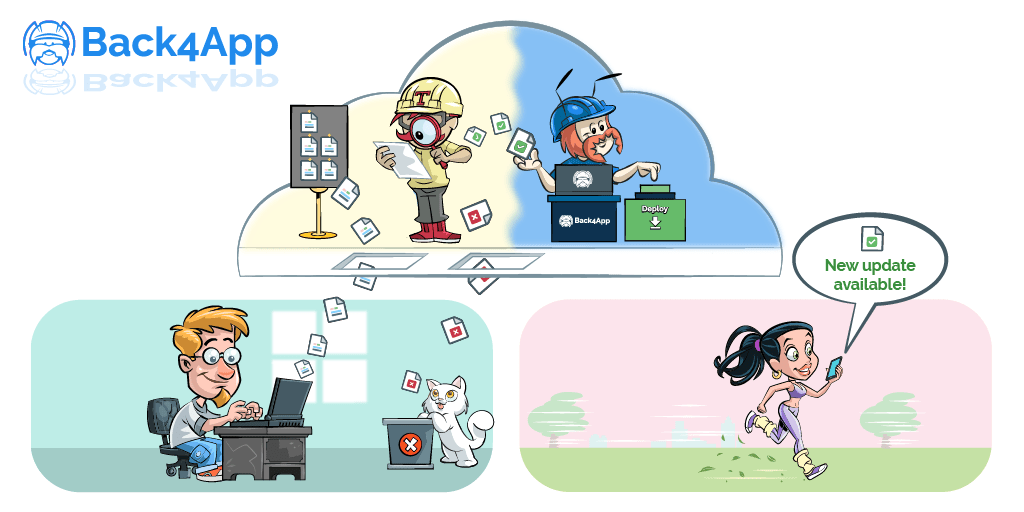
Continuous Integration (CI) is the practice of merging all developer working copies to a shared repository several times a day. Its primary objective is to prevent integration problems, ensure quality and eliminate rework. It is meant to be used in combination with automated unit tests and continuous delivery so as, to reduce the breaking of code and to ensure that the software is always in a state that can be deployed to users, thus making the deployment process much quicker.


To enable all these features, it is necessary to use a CI server. For this tutorial, we will be using Travis CI , which is a hosted, distributed continuous integration service used to build and test software projects hosted on GitHub. Travis can be used to automate all sorts of tasks such as building, testing, and deploying software, with continuous integration and facilitation of technical aspects of continuous delivery.

Node JS and Raspberry pi – Setup

raspberry-back4app-android3x

The Internet of Things is coming closer to our daily lives each day more. With the advent of affordable, connected and small electronics, such as Raspberry Pi or other microcontrollers, we have the feeling that we can remotely control the entire world around us.

However, there is a difference between playing once or twice with electronics and building a reliable application to be actually installed in your home or even sold as a product. One of the features an IoT application must have is a solid Internet backend, in order to handle a high volume of requests, ensure scalability or work even under realistic connectivity.


Scaling Parse Server

scaling_parse_server

Now in 2020, more than 4 years have passed since Facebook decided to release the open-source version of Parse. During this time many new features were released and the community of supporters is larger than ever. We take pride in the number of Parse.com users who have subsequently decided to put their trust in Back4App’s Parse Server Platform. We want to share with the community some of the lessons we’ve learned since this journey begun.

Scaling Parse has been an issue for several Parse users and we will unlock the secrets of how to scale Parse. 


Command Line Interface to Parse Server

The powerful Command Line Tool you’ve been using on Parse.com is now available at Back4App. You can continue to interact with your Parse Server using the Terminal. The Back4App CLI(command line interface) can be used to perform various actions on your Parse App like to create a new app, develop and deploy cloud code, manage app releases, set the SDK version, etc.


Parse Live Query comes to Back4App

The idea of ensuring that app development proceeds as quickly and efficiently as possible lies at the heart of back4app’s philosophy. Therefore, the recent addition of the Live Query feature to back4app makes app development on this platform an even more attractive option. Access to real-time information on database changes is particularly important to developers. Through activation of Parse Live Query, they can now receive these real-time notifications of relevant database changes.


More Good Reasons to Work with Back4app

Barely two months remain to the scheduled closure of Parse.com on 28th January 2017. If there are any developers or enterprises out there still pondering which alternative App development and Parse Server hosting solution to choose, final decision time is here. Recent major improvements in Back4app’s Parse Server platform ensure that it continues to provide the most efficient and economical alternative to Parse.com. New clients soon recognise that Back4app is much more than an acceptable substitute but in many respects, it offers them far superior service levels than the competition. When you consider factors such as App migration, performance, reliability, customer support, flexible user plans and the availability of many other valuable features Back4app becomes the professional app developer’s preferred platform choice.


Firebase vs. Parse Server | Secrets Unlocked

Parse vs Firebase
Firebase vs Parse

Are you looking for an effective Backend as a Service solution to power the backend of your applications?

A robust backend of an application ensures its success and enhances its credibility. No matter how attractive your application looks, the absence of a powerful backend can fail your application to deliver the best.

However, when it comes to picking the best backend solution, multiple factors are vital in making a successful selection. Considering compelling features of your preferred services are essential. However, Parse and Firebase are two well-known backend options available. Let’s get deep into these solutions to know which can work the best for you.

Google has recently released a new version of Firebase. It provides a unified platform to build Android, iOS, and Web Apps. Admob, Analytics, Authentication, Indexing, Test Lab, ML, and Notifications are some of the new features introduced in the latest version of Firebase.

Parse Server is a better choice to build new apps or APIs. Read on to get a sense of comparison between the two and understand why Parse Server is still better.


Back4app is attending Stanford LaunchPad program

There is another feather in the cap for the Back4app team as they attend this year’s Stanford LaunchPad program. This accomplishment provides a significant boost to the already fast-growing company that aims to help customers get better back-end service. Back4app. has two Stanford MBA’s working for the company, which makes the company eligible for entry into this prestigious program.


open
Build, deploy and scale your app with Back4App Containers

open
Build, deploy and scale your app with Back4App Containers. Start today!