George Batschinski

Top 10 AWS Amplify Alternatives

Top 10 AWS Amplify Alternatives

The best 10 AWS Amplify Alternatives

AWS Amplify is one of the most amazing backend platform which can allow the developers to build and integrate backend functionality in the best possible way.

In 2022 the Amplify-JS framework, has more than 1,8k forks and 8.6k stars. It is offering an amazing range of features that can bring exciting and more innovative backend solutions for mobile and web applications.

Even more, AWS Amplify is one of the most effective cloud-based solution providers too who can help the organizations and developers to manage their cloud-based operations in a better way.

AWS Amplify is an easier to scale option which comes with a higher level of flexibility to provide more functionality and easy management in the best possible way.

There are multiple AWS amplify alternatives that have the ability to allow you similar functionalities with a more amazing array of features. Here we have brought some of the best alternatives to AWS Amplify which are surely better for you to know:
Backendless Alternatives: Top 8 Competitors

Backendless Alternatives: Top 8 Competitors

Backendless Alternatives: Top 8 Competitors

Backendless is one of the best MbaaS available in the market right now. It has a lot of features not present in many other mobile as a service in the market. But for some reason, you don’t like Backendless, or their service is not available in the format you need, here are the top 8 alternatives that you should know about:


BaaS: What are the benefits?

BaaS: What are the benefits?

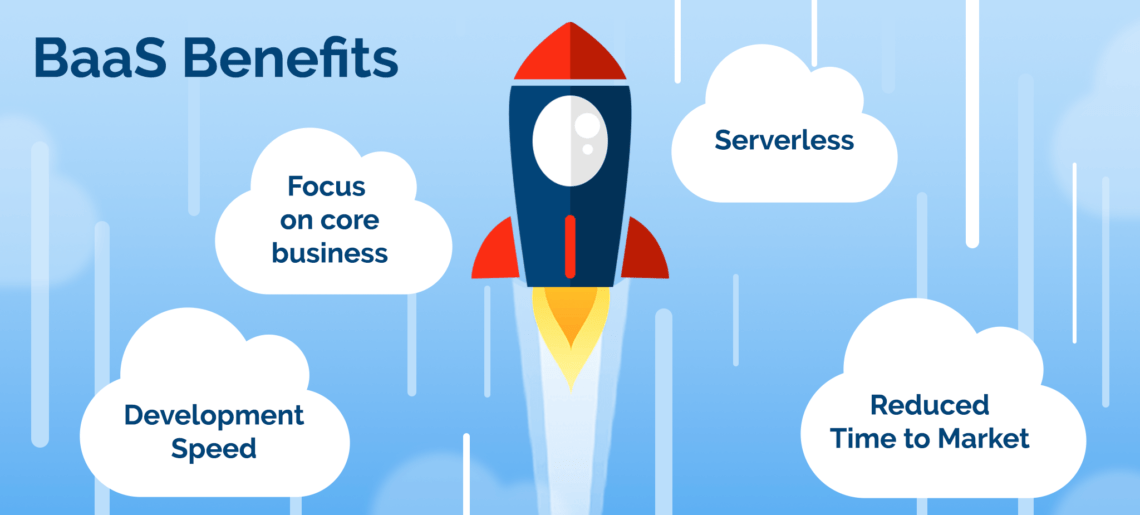
This article will explore the benefits of using a BaaS – Backend as a Service platform. It will provide an overview about this cloud service and a list of core features.

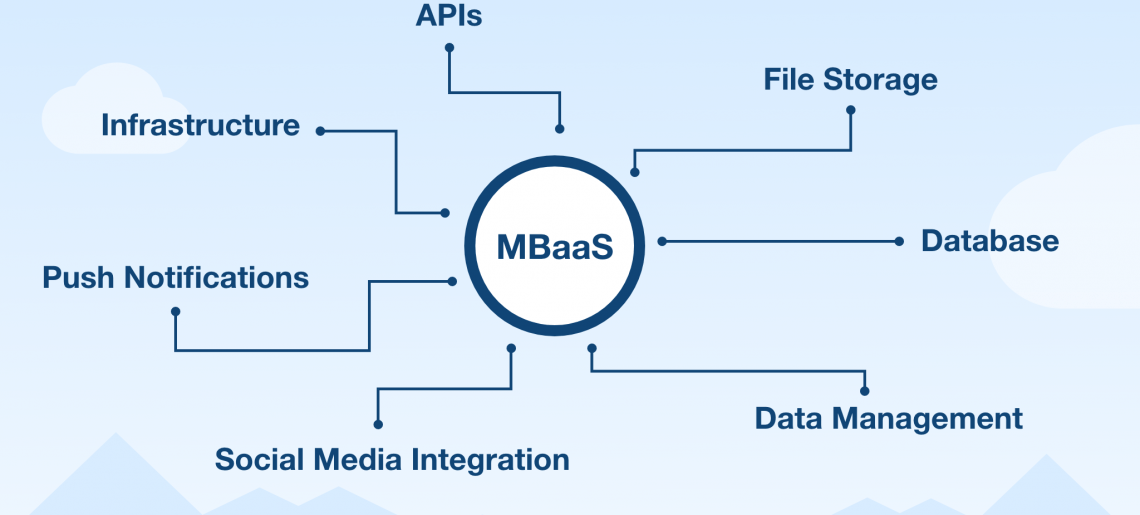
A Backend as a Service platform automates server-side development and handles the underlying infrastructure. It delivers ready-to-use backend building blocks, allows users to outsource the infrastructure management, and is used by app developers to build web and mobile apps.

Core Features of a Backend as a Service

The key features of a BaaS include:

  • Database
  • APIs and SDKs
  • Cloud Code Functions
  • Notifications (Push Notifications, Email Notifications, etc)
  • Cloud Storage
  • Authentication (Social Media, Email, etc)
  • Cloud Based Hosting

For a detailed list of features, please read the article BaaS Features. 

Should I use a BaaS? 

The advantages of a BaaS vs. a custom backend rely on a faster time-to-market, lower development cost, and scalability. On the other hand, a custom backend will provide more flexibility, complete control, and customization opportunities.

There is no right or wrong, and the ideal solution will depend on the project being developed.


MBaaS vs PaaS – What’s the Difference?

MBaaS vs PaaS – What’s the Difference?

MBaaS vs PaaS

Developing an application focuses on writing quality code that translates into fluid and feature-rich offerings for target users. But did you know that there is a need to prioritize the type of cloud functionality your app needs?

A developer needs ample space to store, access, and streamline the information that is being created through user activity. Cloud infrastructure is essential whether you are developing an app for Android, iOS, or HTML5 environments.

The cloud environment you use will dictate how your application will run, fetch required data, and respond to scalability demands. The type of cloud infrastructure you choose for an application directly impacts the performance and accessibility of data.

Two of the most widely preferred infrastructures today are MBaaS and PaaS.

The MBaaS vs PaaS debate has raged on for quite some time, and the infrastructures have the global development community divided in opinion. Each has its own sets of features, enables certain functionalities, and carries a host of benefits. Read on to get a better idea about both MBaaS and PaaS to make your choice simpler.


BaaS vs FaaS – What’s the Difference?

BaaS vs FaaS – What’s the Difference?

BaaS vs FaaS understand the differences

Cloud computing is also opening the new doors of opportunities to utilize higher levels of platform services such as API gateways, authentication, queues, and much more. However, at present, serverless architectures are also under discussion. However, the question here is, are we going to embrace serverless architectures next? Well, you need to understand the fact that most of the talk and think about the serverless architectures are in the same breath. Well, BaaS and serverless or FaaS are two recent categories in the ever-changing and vast world of cloud computing services. These technologies certainly have their own benefits. However, to know more about these, it is highly important to dive a bit deep into these to understand which one is going to work for your organization more effectively. We will also have a look at FaaS vs. BaaS for better understanding. So, here we go:


What Projects Are Best Suited to BaaS?

What Projects Are Best Suited to BaaS?

What Type of Projects Are Best Suited to BaaS?

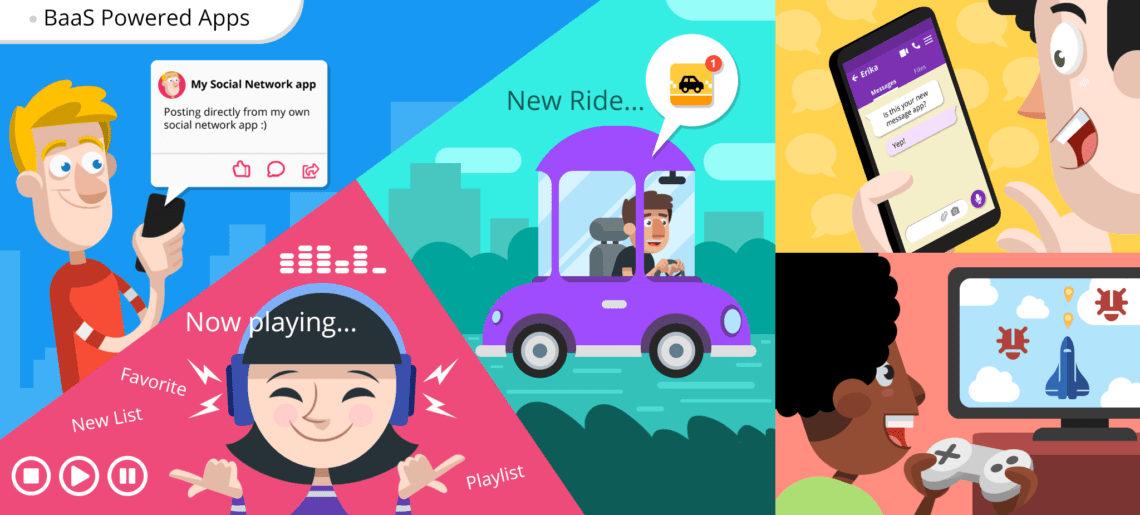
Reading this article you will discover five types of projects that you can develop using a BaaS – Backend as a Service. The list includes:

  • Social media apps (alike Facebook, Instagram, etc)
  • Real-time chat applications (alike WhatsApp)
  • Taxi apps (alike Uber)
  • Video and music streaming apps (similar to Netflix)
  • Mobile games


What is Backend as a Service?

What is Backend as a Service?

What is Backend as a Service?

As innovation and competition increase, developers are always on the lookout for ways to work faster and lower costs. The demand is being met by Backend as a Service (BaaS) platforms. These services free up programmers to focus on the client-side of their apps while allowing these new resources to handle the backend services.

As application developers continue to look for faster and more efficient ways to get new apps to market, BaaS is becoming a more popular option for powering backend services. BaaS automates the backend development of an application and handles all of the cloud infrastructure. Instead of requiring developers to start from scratch creating and perfecting backend services, BaaS offers tools to simplify the process allowing developers to focus on the front end features and functionality such as user interfaces and client-side logic and leave behind the scenes tasks like database management, user authentication, and hosting to a third party. In apps using BaaS, APIs (unified application interface) and SDKs (software developer kits) are used to connect applications to the cloud-based backend services rather than creating and maintaining a backend on a client’s on-site servers.


Baas vs PaaS: Which is a better option?

Baas vs PaaS: Which is a better option?

Baas vs PaaS – Understand the differences

Most commonly, it becomes quite confusing for people to understand the world of BaaS vs PaaS terminologies.

Suppose you are the one who is connected with the industry of development in any way. In that case, it is imperative for you at present to understand the difference between the two most beautiful and essential terminologies of the world of cloud computing. These terminologies are meant to change the traditional ways of software development, whether web or mobile application development.

Keep reading to have a look at detailed information regarding BaaS vs Paas.


GraphQL Hosting

GraphQL Hosting

It’s no mystery that every developer wants to make high-quality applications, and if you’re one of them, we are here to assist you in finding a straightforward way to implement and host a GraphQL database. In the past, I’ve been an assiduous REST user, but my concerns about its complexity, over fetching requests and data transfer costs have led me to explore other alternatives.

In addition to some first-tier GraphQL hosting providers such as Back4App, there’s a frequently expanding list of cloud service providers that allow affordable GraphQL hosting.

In this tutorial, I’ll also describe some of the best cloud options to host GraphQL APIs; some providers that are less established but still useful to developers. The tutorial will cover the following hosting options:

  • Parse
  • Back4App
  • Graphcool
  • AWS App Sync
  • Hasura


GraphQL BaaS – Backend as a Service

GraphQL BaaS – Backend as a Service
graphql-baas

Creating the next big mobile app is an expensive and time-consuming process. Taking your idea to life demands time, energy, and financial resources. I will explore how new technologies like GraphQL will reduce your time to market and speed up your app development process.

This article will explain the benefits of using GraphQL together with Backend as a Service platform, and here is a summary of what you will learn:


open
Build, deploy and scale your app with Back4App Containers

open
Build, deploy and scale your app with Back4App Containers. Start today!